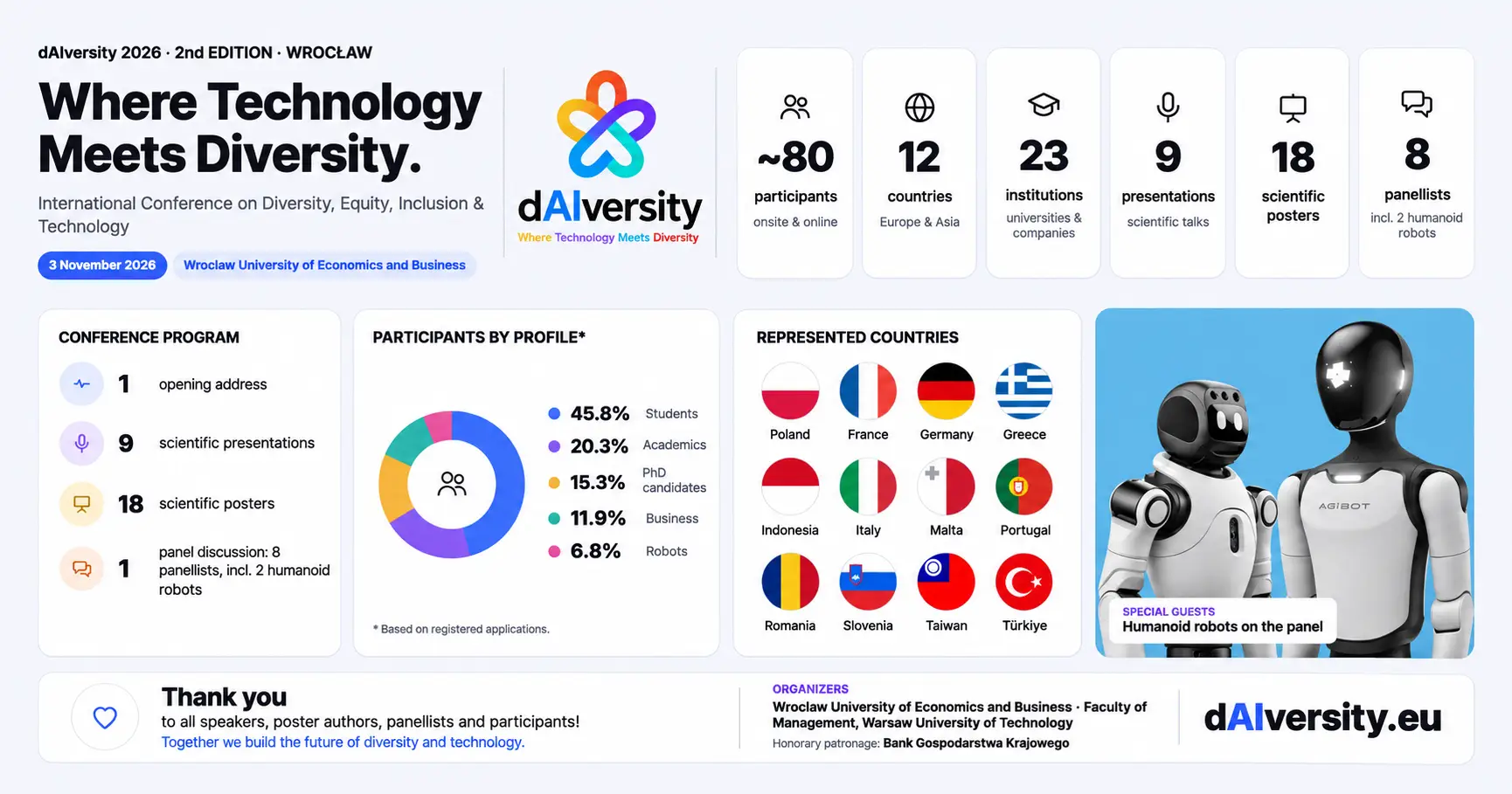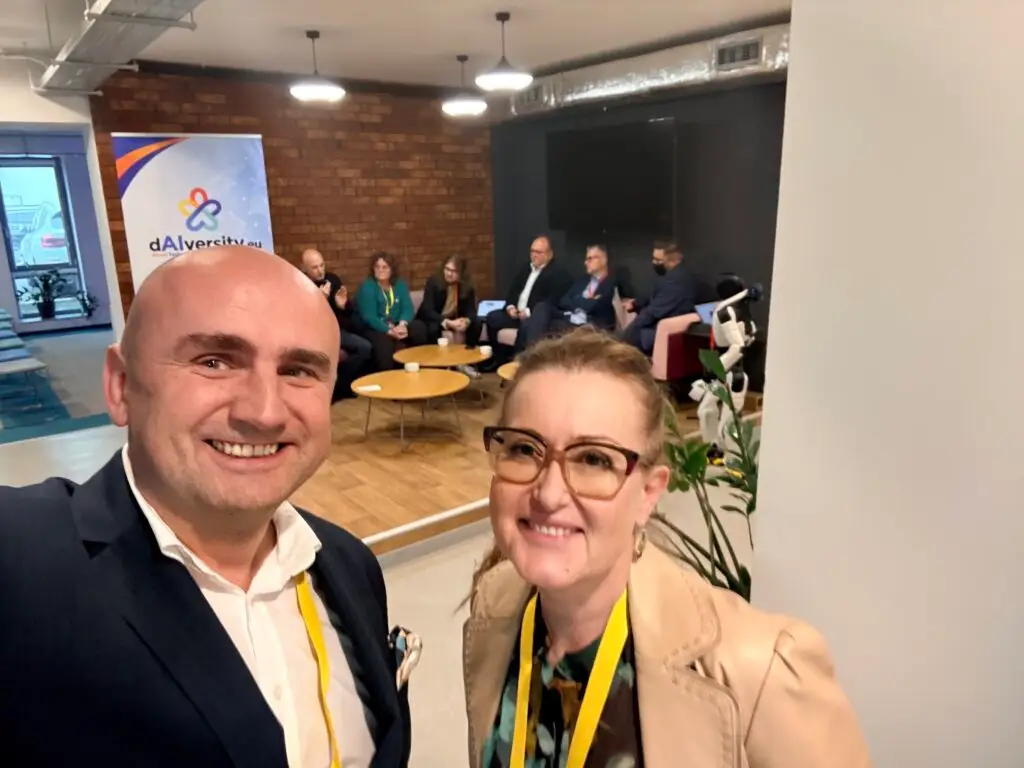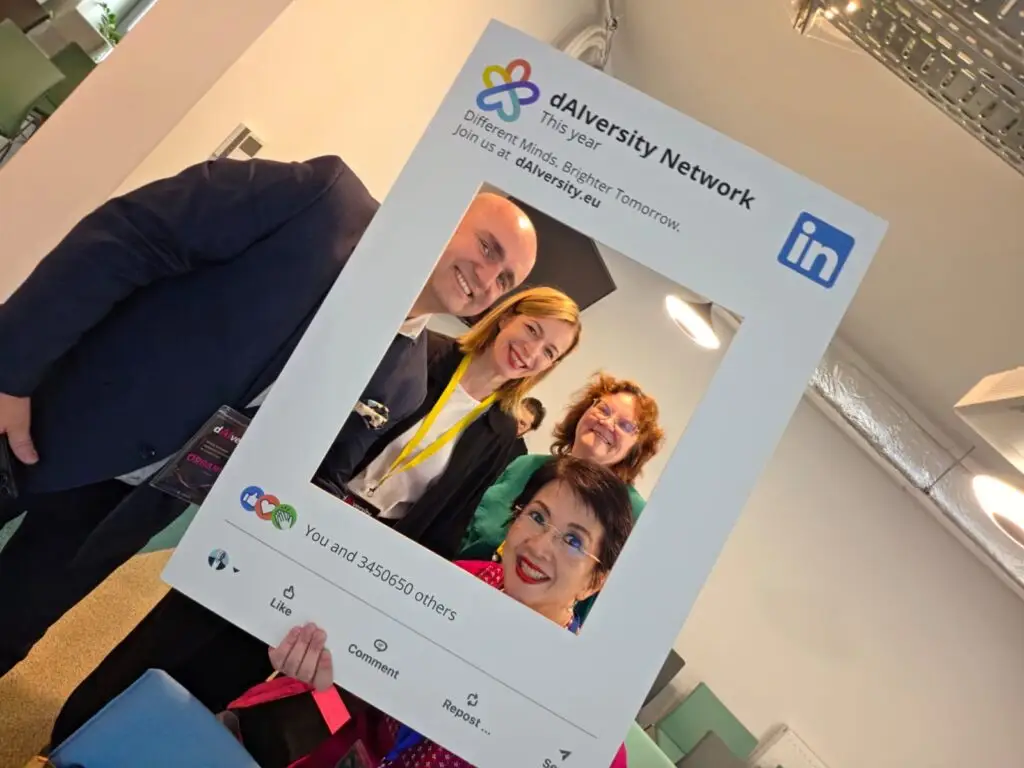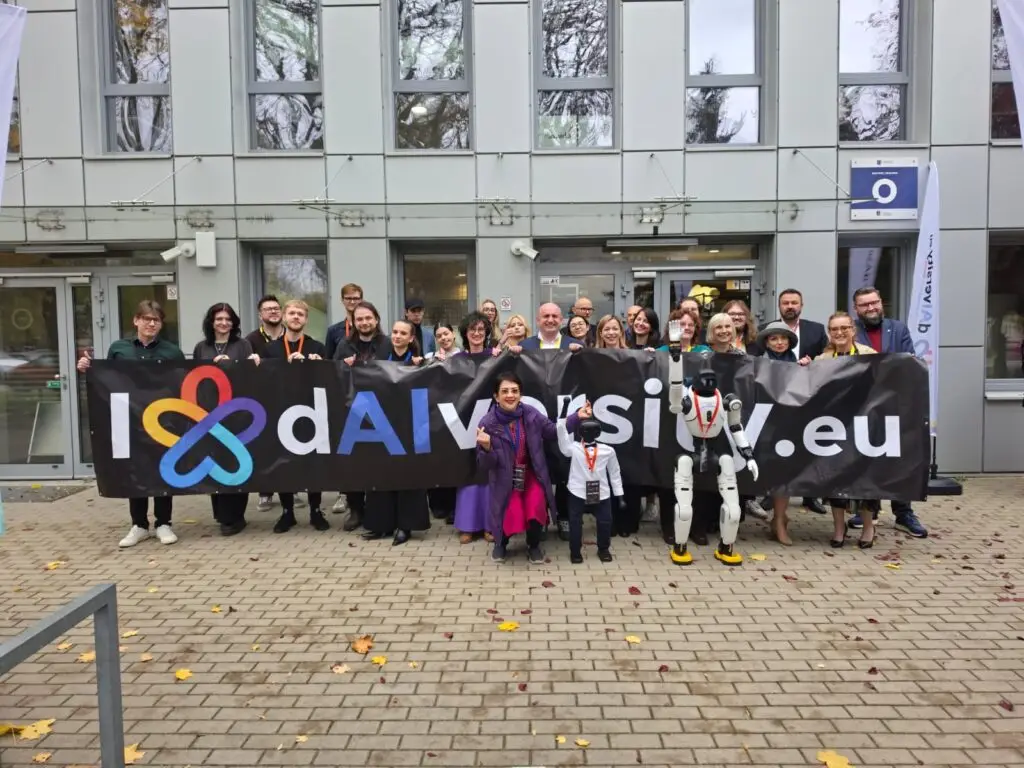
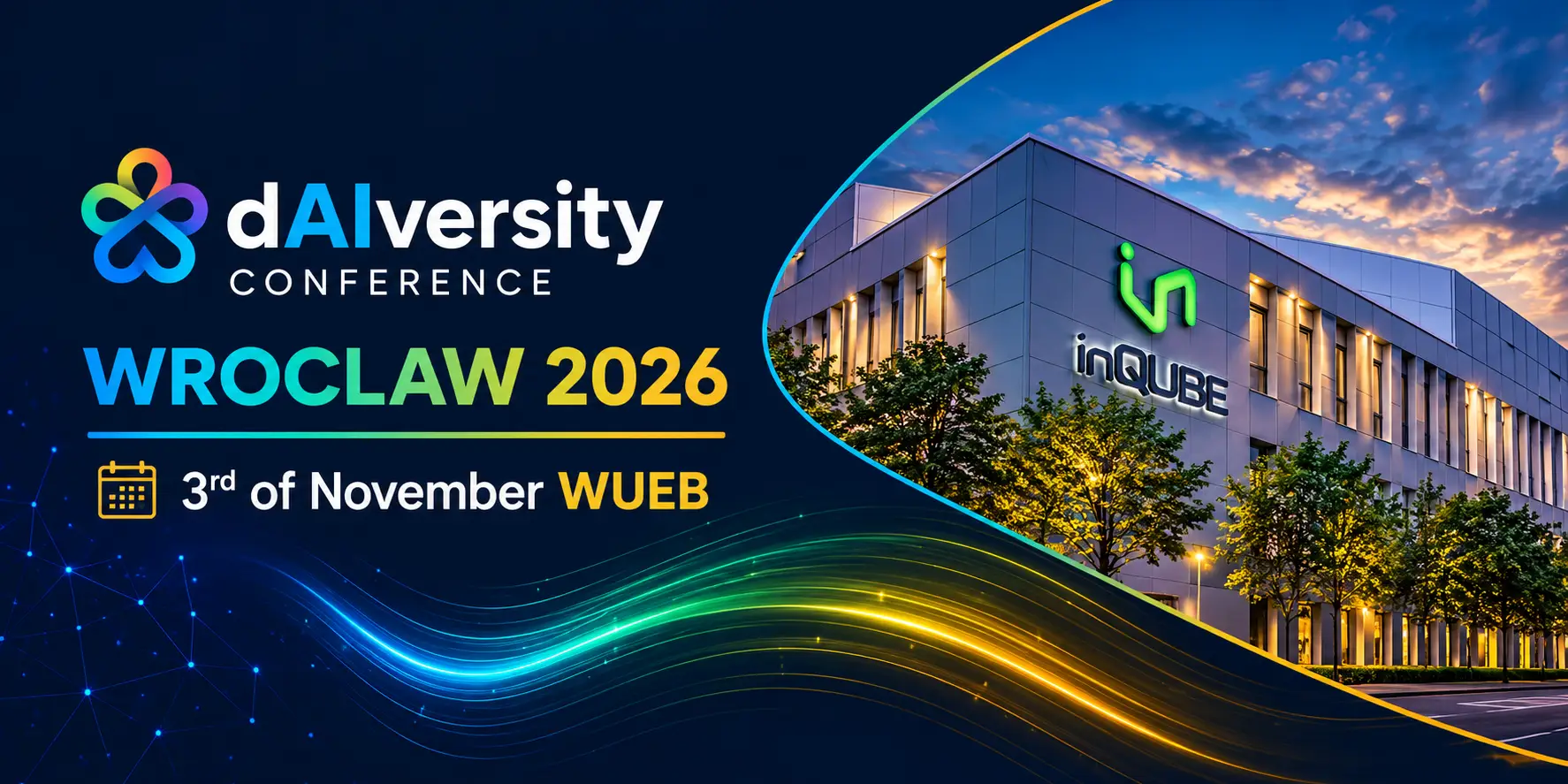
On November 3, 2026, Wroclaw University of Economics and Business hosted the second edition of the international dAIversity Conference. The conference continued the discussion launched in Warsaw in July 2026 on diversity, inclusiveness, and the use of artificial intelligence and new technologies in contemporary organizations and society.
The event was jointly organized by Wroclaw University of Economics and Business and the Faculty of Management of Warsaw University of Technology. Nearly 80 people took part in the conference, both on-site and online. Participants came from 12 countries and represented 23 universities, companies, and institutions. This confirmed the growing reach of the dAIversity network as a platform for the international exchange of knowledge, experience, and good practices.
The conference was opened by Prof. Iwona Chomiak-Orsa of Wroclaw University of Economics and Business. She welcomed the participants and guests and highlighted the importance of continuing the dAIversity initiative as a shared undertaking of the Wrocław and Warsaw academic communities.
The scientific programme featured presentations by researchers from Poland and abroad:
The presentations addressed a wide range of issues where technology and diversity meet:
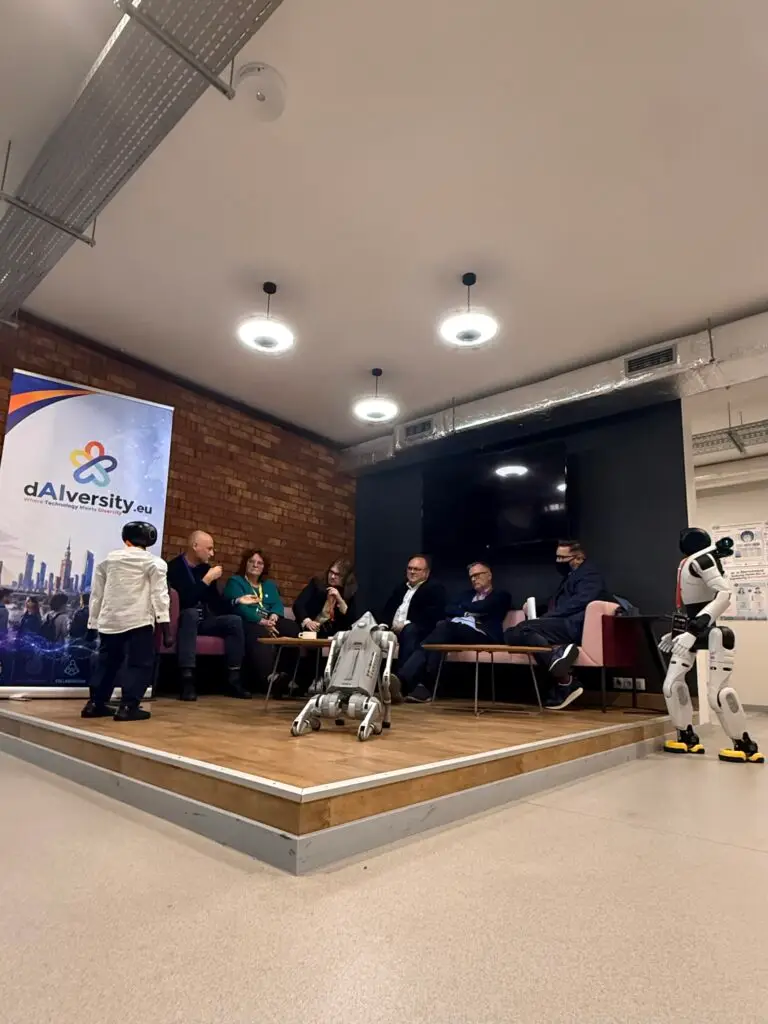
The scientific part was followed by a panel discussion with representatives of academia and business. Panellists discussed how organizations can use artificial intelligence responsibly while fostering diversity and inclusion. They confronted research findings with the practical experience of companies undergoing digital transformation.
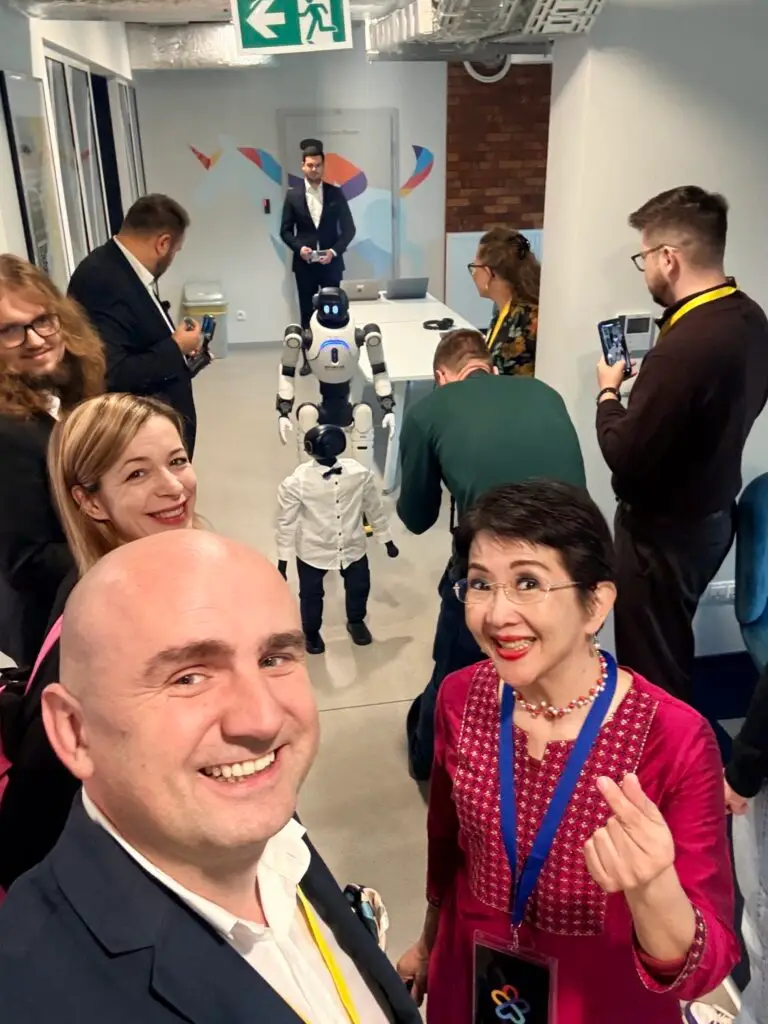
A special highlight of the event was the participation of humanoid robots. They gave participants a chance to experience first-hand how advanced AI-driven technologies are entering the workplace and everyday life. Their presence also sparked lively conversations about the future of human–machine interaction and the place of people in increasingly automated organizations.
The second edition of dAIversity confirmed that the questions raised in Warsaw resonate strongly across the academic and business communities in Poland and abroad. The conference strengthened cooperation between Warsaw and Wrocław research centres and broadened the international network of partners. It also opened new opportunities for joint research, publications, and educational initiatives.
The conference was held under the honorary patronage of Bank Gospodarstwa Krajowego.
We would like to sincerely thank all speakers, panellists, participants, and partners, and especially the organizing team at Wroclaw University of Economics and Business, for their contribution to the success of the second edition. We look forward to meeting again at the next dAIversity conference.
Check the original website of dIversity 2026 in Wroclaw.